
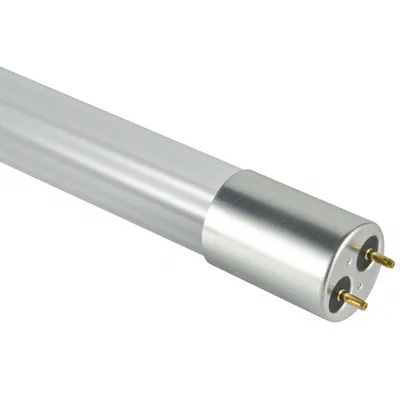
Applications:
UV germicidal lamps are widely used in hospitals, schools, the food and pharmaceutical industries, nurseries, cinemas, buses, offices, homes, and more. They purify the air, eliminate unpleasant odors, and produce a certain amount of negative oxygen ions. The air in a room feels very fresh after UV disinfection. In public places, UV disinfection can prevent some germs from spreading through the air or on surfaces. Long-life germicidal UV lamps are of great importance in water disinfection and environmental protection engineering. Water disinfection equipment generally operates 24 hours a day, and the lifespan and reliability of UV lamps are very high. If the lamp’s lifespan is short, the cost of replacing it is high, which is very inconvenient.
Features:
High UV sterilization efficiency against bacteria and viruses (radiation intensity: 30,000 μW/cm²)
Method of Action:
Ultraviolet (UV) radiation of the appropriate wavelength can destroy the molecular structure of DNA (deoxyribonucleic acid) or RNA (ribonucleic acid) in microbial cells, leading to the death of developing cells and/or regenerating cells, thus achieving sterilization and disinfection. UV radiation falls within the peak absorption range of microorganisms, so it can kill viruses and bacteria by destroying the DNA structure of microorganisms within one second.
Cautions:
- Do not look directly at the UV lamp when it is on.
- Do not shine the UV lamp directly onto the skin.
- Hold a piece of ordinary glass in front of your eyes when you need to look at the UV lamp.
- Keep the tube surface clean to prevent dust or dirt from affecting the UV output. Please do not touch the quartz glass with bare hands while installing and using the lamp.
- Quartz glass can be cleaned with alcohol.
Reviews
There are no reviews yet.